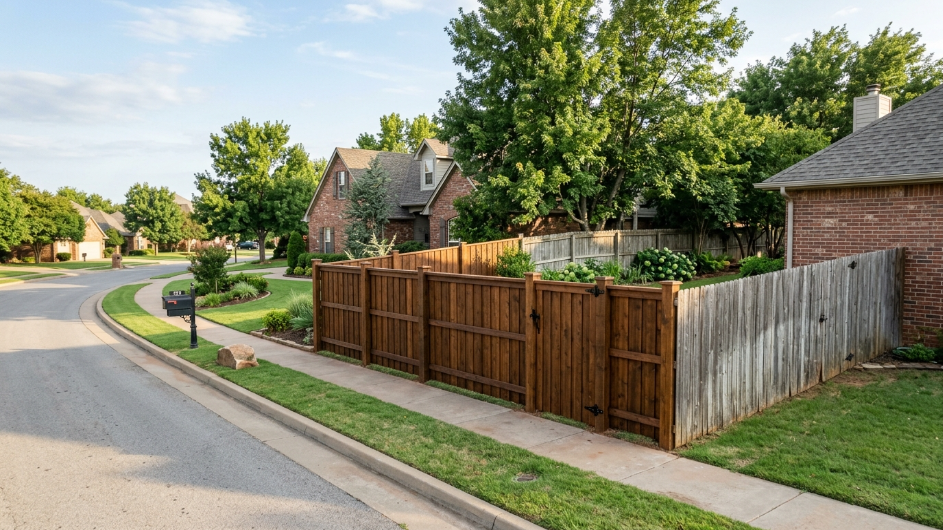
A fence does more than mark a property line. It keeps pets contained, blocks street noise, and gives a backyard some privacy from neighbors. When boards start splitting or a gate stops latching, homeowners are often left wondering whether the whole structure needs to come down or whether a targeted repair will do the job.
Fence repair in Edmond, OK comes with its own set of considerations, largely because of the region’s weather swings and the mix of housing stock across the city. Neighborhoods built in the early 1990s, when Edmond saw a wave of residential growth, often still have their original wood fencing, which means age-related wear shows up differently than it would on a fence installed five years ago.
Signs a Fence Needs Repair Instead of Replacement

Not every damaged fence needs to be torn out. In many cases, a handful of the following issues can be fixed without replacing entire sections:
- Leaning posts caused by loosened concrete footings or soil erosion
- Warped or split boards from moisture absorption and temperature swings
- Rusted hardware on gates, hinges, and latches
- Rot at the base of wood posts where they meet the soil
- Sagging chain-link fabric that has pulled away from the top rail
A fence with isolated damage in one or two spots is usually a repair job. Widespread rot, multiple leaning sections, or a structure older than 20 years often points toward replacement being the more cost-effective choice long term.
What Drives Fence Damage in Edmond’s Climate
Oklahoma sits within what meteorologists call Tornado Alley, and Edmond experiences the full range of that exposure: high summer humidity, sudden temperature drops, and straight-line winds that can exceed 60 mph during spring storm season. That combination puts steady stress on fencing materials, particularly wood and vinyl panels that catch wind like a sail.
Wind and Storm Exposure
Spring storms are the single biggest cause of fence damage calls across central Oklahoma. Wind doesn’t need to reach tornado strength to knock over a fence section; sustained gusts during a thunderstorm can loosen posts that were already weakened by age or poor initial installation. Fences running along open lots or near intersections such as those close to Kelly Avenue or Santa Fe Avenue tend to catch more wind than fences tucked between houses.
Soil and Moisture Conditions
Central Oklahoma has a mix of clay-heavy soils that expand when wet and contract when dry. That movement puts pressure on post footings over time, which is why a fence can look fine one year and start leaning the next without any single storm event to blame. Homes near creek beds or lower-lying areas of the city tend to see this more often than properties on higher, well-drained ground.
Repair Costs and Materials to Consider
Material choice affects both repair frequency and cost. Wood remains common because it’s easy to patch section by section, but it also needs the most upkeep. Vinyl holds up well against moisture but can crack in a hard freeze if it’s an older, lower-grade product. Chain-link is the least expensive to fix, usually requiring only fabric or post replacement rather than a full panel swap.
| Material | Typical Repair Range | Common Issue |
|---|---|---|
| Wood | $150–$500 per section | Rot, warping, split boards |
| Vinyl | $200–$600 per section | Cracking, discoloration |
| Chain-link | $100–$300 per section | Sagging fabric, bent posts |
| Wrought iron | $250–$700 per section | Rust, loose welds |
These figures are general ranges based on typical residential repair work and can shift depending on fence height, gate hardware, and how much of the structure needs attention at once. A contractor who inspects the property in person will give a more accurate number than any online estimate.
Finding Help Locally

Edmond’s population has grown to roughly 99,000 residents, and the city’s median household income sits around $103,183, according to recent Census Bureau data. That income level supports a fairly active home-improvement market, and licensed contractors working the Edmond area typically handle everything from small hardware fixes to full section rebuilds.
A few things worth checking before hiring someone for repair work:
- Confirm the contractor carries general liability insurance
- Ask whether they pull permits when required by the City of Edmond for fence height or placement changes
- Request references from recent jobs in the same neighborhood or nearby areas along the Broadway Extension corridor
- Get a written estimate that separates labor from materials
Homeowners near downtown Edmond or close to the University of Central Oklahoma campus should also check HOA guidelines, since many older subdivisions in that part of the city have specific rules about fence height and materials visible from the street.
Frequently Asked Questions
How long does a typical fence repair take?
Most single-section repairs are finished in a day. Larger jobs involving multiple posts or a full gate rebuild can take two to three days depending on weather and material availability.
Can a leaning fence be fixed without replacing the whole section?
Often, yes. If the post itself is sound, resetting the footing or adding a support brace can correct the lean without touching the panels.
Is fence repair cheaper than replacement?
Generally, repair costs less per project, but a fence needing repairs in more than a third of its length is usually close to the cost of full replacement once labor is factored in.
Does homeowners insurance cover storm damage to fences?
Some policies do, particularly for wind or hail damage from a named storm event. Coverage varies by insurer, so checking the policy details or calling the provider directly is the best way to confirm.
Final Thoughts
Fence repair decisions come down to the extent of the damage, the material involved, and how much longer the existing structure is expected to hold up. A careful inspection before choosing repair or replacement saves both money and future headaches.